
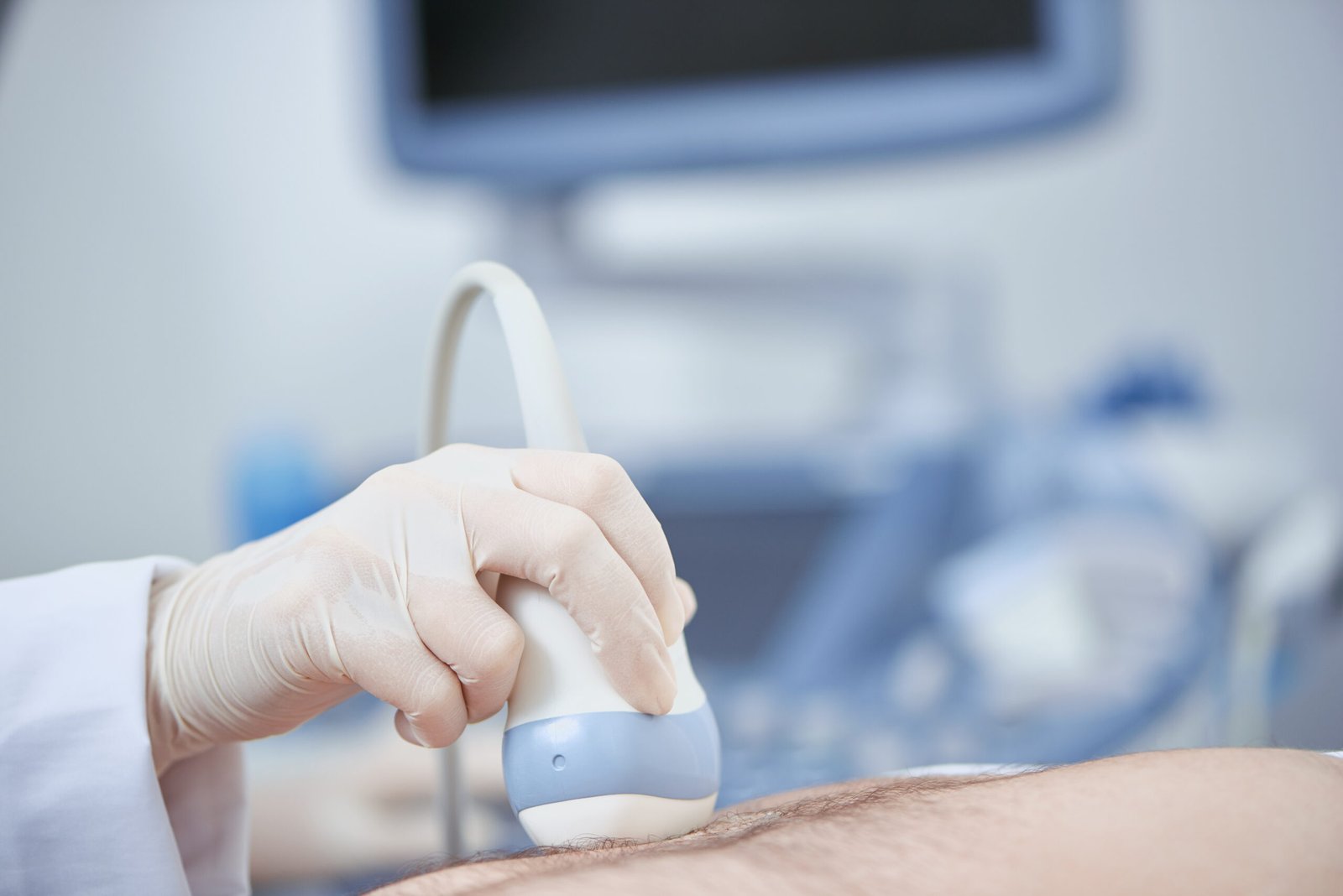
FibroScan can help assess two important features of fatty liver disease: the amount of fat in the liver and whether there are signs of liver stiffness that may be associated with fibrosis or scarring.
The test is quick and non-invasive and can provide useful information for people with metabolic dysfunction-associated steatotic liver disease (MASLD), previously called non-alcoholic fatty liver disease (NAFLD).
However, FibroScan results should not be interpreted on their own. Your physician will consider them together with your medical history, blood tests, other imaging and individual risk factors.
At Exact Check Diagnostic Center, FibroScan testing is available for patients who have been advised to assess or monitor their liver health.
What Is Fatty Liver Disease or MASLD?
Metabolic dysfunction-associated steatotic liver disease (MASLD) is a condition in which excess fat accumulates in the liver in association with metabolic risk factors.
MASLD is the newer terminology for what was previously commonly called non-alcoholic fatty liver disease or NAFLD.
Many people with fatty liver have no obvious symptoms, which means it may first be identified through blood tests, imaging or examinations performed for another reason.
Not everyone with fatty liver develops serious liver disease. However, in some people, liver fat is associated with inflammation and progressive fibrosis.
What Is Liver Fibrosis?
Fibrosis is the formation of scar tissue in the liver following ongoing or repeated liver injury.
If liver injury continues over time, fibrosis can become more advanced. Severe liver fibrosis may eventually progress to cirrhosis.
One important goal when evaluating people with fatty liver disease is therefore to identify those who may be at greater risk of significant fibrosis and require further medical assessment or monitoring.
Who Is at Risk for Fatty Liver Disease?
MASLD is closely associated with metabolic health.
Risk factors can include:
- Overweight or obesity
- Increased abdominal fat
- Type 2 diabetes
- Insulin resistance
- High triglycerides or other abnormal blood lipids
- High blood pressure
- Other features of metabolic syndrome
Having these risk factors does not automatically mean you have fatty liver disease.
If you are concerned about your risk, your physician can determine which blood tests, imaging studies or other assessments are appropriate.
How Does FibroScan Help Assess Fatty Liver?
FibroScan uses transient elastography to obtain non-invasive measurements from the liver.
Depending on the device and examination, it may provide two measurements particularly relevant to fatty liver disease:
- Controlled Attenuation Parameter (CAP), which is associated with liver fat or steatosis
- Liver Stiffness Measurement (LSM), which can help assess possible liver fibrosis
These measurements provide different information and need to be interpreted appropriately.
What Is a CAP Score?
The Controlled Attenuation Parameter or CAP measures how ultrasound energy is attenuated as it passes through the liver.
CAP is generally reported in decibels per meter (dB/m).
Higher CAP measurements are generally associated with greater amounts of liver fat.
However, a CAP score does not directly tell you the exact percentage of fat in your liver, and there is no single cutoff that should be applied to every patient without considering the clinical context.
Your physician will interpret your CAP measurement together with your other results.
What Is a Liver Stiffness or kPa Score?
FibroScan also measures liver stiffness, generally reported in kilopascals or kPa.
Increased liver stiffness can be associated with fibrosis.
However, liver stiffness can be influenced by factors other than fibrosis, and the significance of a particular kPa measurement can vary depending on the underlying liver condition and other clinical factors.
This is why searching online for a single “normal FibroScan score” can be misleading.
Your result should be interpreted by your physician rather than used as a standalone diagnosis.
Does FibroScan Diagnose Fatty Liver?
FibroScan can provide information about liver fat and stiffness, but it is not the only tool used to evaluate fatty liver disease.
Your physician may consider a combination of:
- Medical history
- Physical examination
- Liver enzyme and other blood tests
- Metabolic markers such as blood glucose and lipid levels
- FibroScan measurements
- Conventional liver ultrasound or other imaging
- Other non-invasive fibrosis assessments
- Additional testing when clinically necessary
The appropriate combination depends on the individual patient.
FibroScan vs. Liver Ultrasound for Fatty Liver
Both FibroScan and conventional ultrasound may be used when evaluating liver health, but they provide different information.
| FibroScan | Liver Ultrasound |
| Provides liver stiffness measurements | Provides anatomical images of the liver |
| CAP can provide information associated with liver fat | Can show imaging features associated with fatty liver |
| Helps assess possible fibrosis | Can identify certain structural abnormalities |
| Provides numerical measurements | Primarily provides anatomical information |
| Uses transient elastography | Uses diagnostic ultrasound imaging |
One test does not necessarily replace the other. Your physician may request one or both depending on the clinical question.
Can Fatty Liver Be Reversed?
Liver fat can decrease, and liver health can improve, particularly when the underlying metabolic risk factors are addressed.
The potential for improvement depends on the stage of liver disease and the individual's overall health.
For people with MASLD, management may include addressing factors such as:
- Body weight when appropriate
- Physical activity
- Blood glucose
- Cholesterol and triglycerides
- Blood pressure
- Nutrition
- Alcohol consumption
- Other medical conditions
More advanced liver disease requires appropriate medical assessment and management.
Rather than trying to interpret or treat fatty liver based solely on a FibroScan result, discuss your results with your physician.
What Can I Do If I Have Fatty Liver?
Treatment and lifestyle recommendations should be individualized, but your healthcare provider may discuss strategies such as:
Maintain or Work Toward an Appropriate Weight
For patients with overweight or obesity, medically appropriate weight reduction can improve metabolic health and may reduce liver fat.
Your physician can help determine an appropriate goal based on your individual circumstances.
Exercise Regularly
Regular physical activity can improve cardiovascular and metabolic health and may help reduce liver fat.
Exercise recommendations should take your current health and physical capabilities into account.
Improve Metabolic Health
Managing conditions associated with fatty liver can be an important part of liver care.
This may include appropriate management of:
- Blood glucose
- Blood pressure
- Triglycerides
- Cholesterol
- Other metabolic risk factors
Follow Medical Advice About Alcohol
Alcohol can contribute to liver injury.
Discuss your alcohol consumption with your physician, particularly if you have fatty liver disease or evidence of liver fibrosis.
How Often Should FibroScan Be Repeated?
There is no universal requirement to have a FibroScan every year.
Whether and when testing should be repeated depends on factors such as:
- Your initial results
- Underlying liver condition
- Metabolic risk factors
- Changes in your health
- Treatment or lifestyle interventions
- Your physician's assessment
Your healthcare provider can recommend an appropriate monitoring interval for your circumstances.
Who Should Consider Asking Their Doctor About FibroScan?
You may want to discuss liver assessment with your physician if you have:
- Known or suspected fatty liver disease
- Persistently abnormal liver enzymes
- Type 2 diabetes
- Obesity or metabolic syndrome
- Other significant metabolic risk factors
- A chronic liver condition
- Previous imaging showing fatty liver
- Other findings suggesting possible liver fibrosis
Your physician can determine whether FibroScan or another liver assessment is appropriate.
What Happens During a FibroScan?
FibroScan is a non-invasive examination that does not require needles, incisions or anesthesia.
You will usually lie on your back with your right arm positioned above your head. A probe is placed against the skin over the liver area and a series of measurements is obtained.
You may feel a gentle tapping sensation as measurements are taken.
The examination itself is generally brief.
[Learn more about what a FibroScan is, how to prepare and what your results may mean.]
FibroScan at Exact Check Diagnostic Center
Exact Check Diagnostic Center provides FibroScan testing for liver stiffness and liver fat assessment.
Before your visit, contact Exact Check to:
- Confirm FibroScan availability at your preferred branch
- Ask about the current FibroScan price
- Confirm fasting and preparation requirements
- Check whether you need a doctor's request
- Ask what previous laboratory or imaging results to bring
- Check appointment availability
- Confirm when and how your results will be released
Schedule Your FibroScan
If your physician has recommended FibroScan for fatty liver disease or another liver condition, contact Exact Check Diagnostic Center to confirm availability, preparation requirements, pricing and appointment schedules.
If you are concerned about fatty liver but have not been advised to undergo FibroScan, speak with your physician about which liver tests are appropriate for you.
This article is intended for general educational information and does not replace medical advice, diagnosis or treatment from a qualified healthcare professional.