
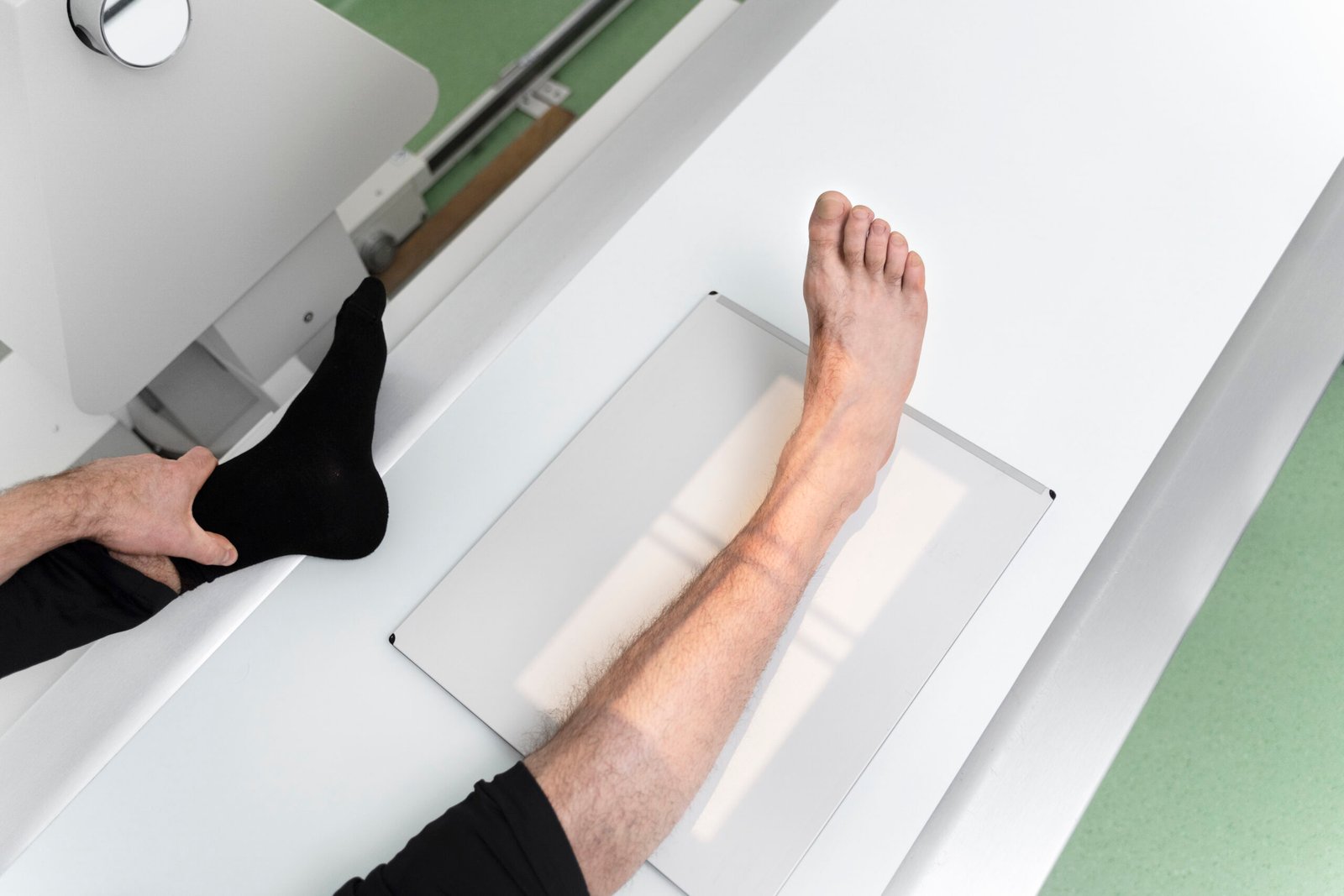
Osteoporosis can develop without noticeable symptoms, and some people don't know they have reduced bone density until they experience a fracture.
Your risk depends on more than age alone. Sex, menopause, family history, body weight, medications, medical conditions, smoking, alcohol use and previous fractures can all affect bone health.
A DEXA or DXA bone density scan measures bone mineral density and can help your physician assess whether you have normal bone density, low bone mass or osteoporosis.
At Exact Check Diagnostic Center, bone densitometry is available for patients who have been advised to assess or monitor their bone health.
What Is Osteoporosis?
Osteoporosis is a condition in which bones become less dense and more fragile, increasing the risk of fracture.
Bone is living tissue that is continuously being broken down and replaced. As people age, changes in this remodeling process can result in gradual bone loss.
Osteoporosis-related fractures commonly occur in the:
- Hip
- Spine
- Wrist
Bone loss itself usually does not cause pain. This is why osteoporosis may go unnoticed until a fracture occurs or another examination identifies reduced bone density.
Who Is at Risk for Osteoporosis?
Anyone can develop osteoporosis, but some people have a higher risk.
1. Increasing Age
Bone density generally decreases with age.
The risk of osteoporosis and fractures therefore increases as people get older, although osteoporosis is not simply an inevitable consequence of aging.
2. Menopause
Women experience accelerated bone loss around and after menopause as estrogen levels decline.
Women who experience early menopause may have additional risk because they spend more years with lower estrogen levels.
3. Family History
Having a parent who experienced a hip fracture or having a strong family history of osteoporosis can increase your risk.
Tell your physician about significant fractures and osteoporosis in close family members when discussing your bone health.
4. Previous Fractures
A fracture resulting from relatively minor trauma, particularly later in adulthood, may indicate increased bone fragility.
If you've experienced a fracture after a minor fall or impact, ask your physician whether bone-density assessment is appropriate.
5. Low Body Weight
Low body weight can be associated with reduced bone density and increased fracture risk.
A history of significant undernutrition or certain eating disorders can also affect bone health.
6. Certain Medications
Some medications can contribute to bone loss, particularly when used for prolonged periods.
One important example is long-term systemic corticosteroid treatment.
Other medications may also affect bone health. Do not stop prescribed medication because of concerns about osteoporosis. Discuss the risks and benefits with your physician.
7. Certain Medical Conditions
Some medical conditions can increase the risk of osteoporosis or fractures.
These may include certain:
- Hormonal or endocrine disorders
- Gastrointestinal or malabsorption conditions
- Inflammatory diseases
- Kidney or liver conditions
- Conditions affecting mobility
- Other chronic illnesses
Your physician can assess whether a particular condition increases your individual risk.
8. Smoking and Alcohol
Smoking is associated with poorer bone health and increased fracture risk.
Higher levels of alcohol consumption can also contribute to fracture risk through effects on bone health and increased risk of falls.
9. Physical Inactivity
Regular physical activity plays an important role in maintaining muscle and bone health.
Long periods of immobility or very low levels of physical activity can contribute to bone loss.
Osteoporosis Risk Factors at a Glance
Your risk may be higher if one or more of the following apply to you:
- You are an older adult
- You are postmenopausal
- You experienced menopause at an unusually young age
- A parent had a hip fracture
- You have previously experienced a low-trauma fracture
- You have low body weight
- You smoke
- You regularly consume higher amounts of alcohol
- You have used systemic corticosteroids for a prolonged period
- You have a medical condition associated with bone loss
- You have experienced prolonged immobility
Having a risk factor does not mean that you have osteoporosis. It may mean that discussing your bone health with your physician is appropriate.
How Do I Know If I Have Osteoporosis?
You cannot reliably determine your bone density based on how your bones feel.
A person can have osteoporosis without pain or other obvious symptoms.
A DEXA bone density scan is commonly used to measure bone mineral density and diagnose osteoporosis in appropriate patients.
The test usually measures bone density at the hip and lumbar spine and produces measurements that can include a T-score.
What Does My T-Score Mean?
A T-score compares your bone mineral density with that of a healthy young adult reference population.
For postmenopausal women and men aged 50 and older, T-scores are commonly classified as:
| T-Score | General Classification |
| -1.0 or above | Normal bone density |
| Between -1.0 and -2.5 | Low bone mass (osteopenia) |
| -2.5 or below | Osteoporosis |
A T-score is important, but it does not tell your physician everything about your fracture risk.
Age, previous fractures, family history, medications and other medical factors also need to be considered.
[Learn more about DEXA scans, T-scores and Z-scores in our guide to bone densitometry.]
Does Osteopenia Always Become Osteoporosis?
No.
Osteopenia, also called low bone mass, means your bone mineral density is below the normal reference range but does not meet the diagnostic threshold for osteoporosis.
It does not necessarily progress to osteoporosis.
Your future risk depends on your bone density together with factors such as age, rate of bone loss, medical conditions, medications and other fracture risks.
Your physician can determine whether lifestyle changes, monitoring, additional assessment or treatment is appropriate.
Should I Get a Bone Density Test?
Whether you should undergo DEXA screening depends on your age and individual risk factors.
Bone density testing is commonly considered for:
- Women aged 65 and older
- Postmenopausal women younger than 65 who have increased fracture risk
- Men aged 70 and older
- Younger men with significant osteoporosis risk factors
- Adults with certain fractures associated with bone fragility
- People taking medications associated with significant bone loss
- People with medical conditions that increase osteoporosis risk
- Patients undergoing osteoporosis treatment when monitoring is appropriate
Screening recommendations vary, so your physician can determine whether and when DEXA testing is appropriate for you.
What Can I Do to Protect My Bone Health?
Bone health is affected by many factors, some of which can be modified.
Depending on your individual health and risk factors, your healthcare provider may discuss:
Calcium and Vitamin D
Adequate calcium and vitamin D are important for bone health.
The amount you need depends on factors such as age, diet and medical circumstances. Supplements aren't automatically necessary for everyone, so discuss supplementation with your healthcare provider when appropriate.
Weight-Bearing and Resistance Exercise
Activities that place appropriate stress on bones and strengthen muscles can support bone health.
These can include:
- Walking
- Resistance or strength training
- Stair climbing
- Other weight-bearing activities
Exercise also supports strength and balance, which can help reduce the risk of falls.
Avoid Smoking
Smoking is associated with increased osteoporosis and fracture risk.
Stopping smoking can provide benefits for bone health as well as cardiovascular, respiratory and overall health.
Review Your Medications
If you take medications associated with bone loss, your physician may consider your bone health as part of your ongoing treatment.
Do not stop or alter prescription medications without medical guidance.
Reduce Your Risk of Falls
Preventing fractures isn't only about improving bone density.
For people at increased risk, measures that reduce the likelihood of falling can also be important. These may include addressing vision, balance, muscle strength, medications and hazards in the home.
How Often Should I Have a DEXA Scan?
There is no universal schedule for repeat bone density testing.
The appropriate interval depends on your:
- Initial DEXA results
- Age
- Risk factors
- Medical conditions
- Medications
- Osteoporosis treatment, if applicable
Your physician can determine when repeat testing would provide useful information.
Bone Densitometry at Exact Check Diagnostic Center
Exact Check Diagnostic Center provides DEXA bone densitometry testing for patients who need osteoporosis screening, fracture-risk assessment or bone-density monitoring.
Before your visit, contact Exact Check to:
- Confirm bone densitometry availability at your preferred branch
- Ask about the current DEXA scan price
- Confirm whether a doctor's request is required
- Check preparation requirements
- Ask what previous results or documents to bring
- Check appointment availability
- Confirm when and how your results will be released
Schedule Your Bone Density Test
If your physician has recommended a bone density test, contact Exact Check Diagnostic Center to confirm availability, preparation requirements, pricing and appointment schedules.
If you have osteoporosis risk factors but haven't been advised to undergo a DEXA scan, speak with your physician about whether bone density testing is appropriate for you.
This article is intended for general educational information and does not replace medical advice, diagnosis or treatment from a qualified healthcare professional.