
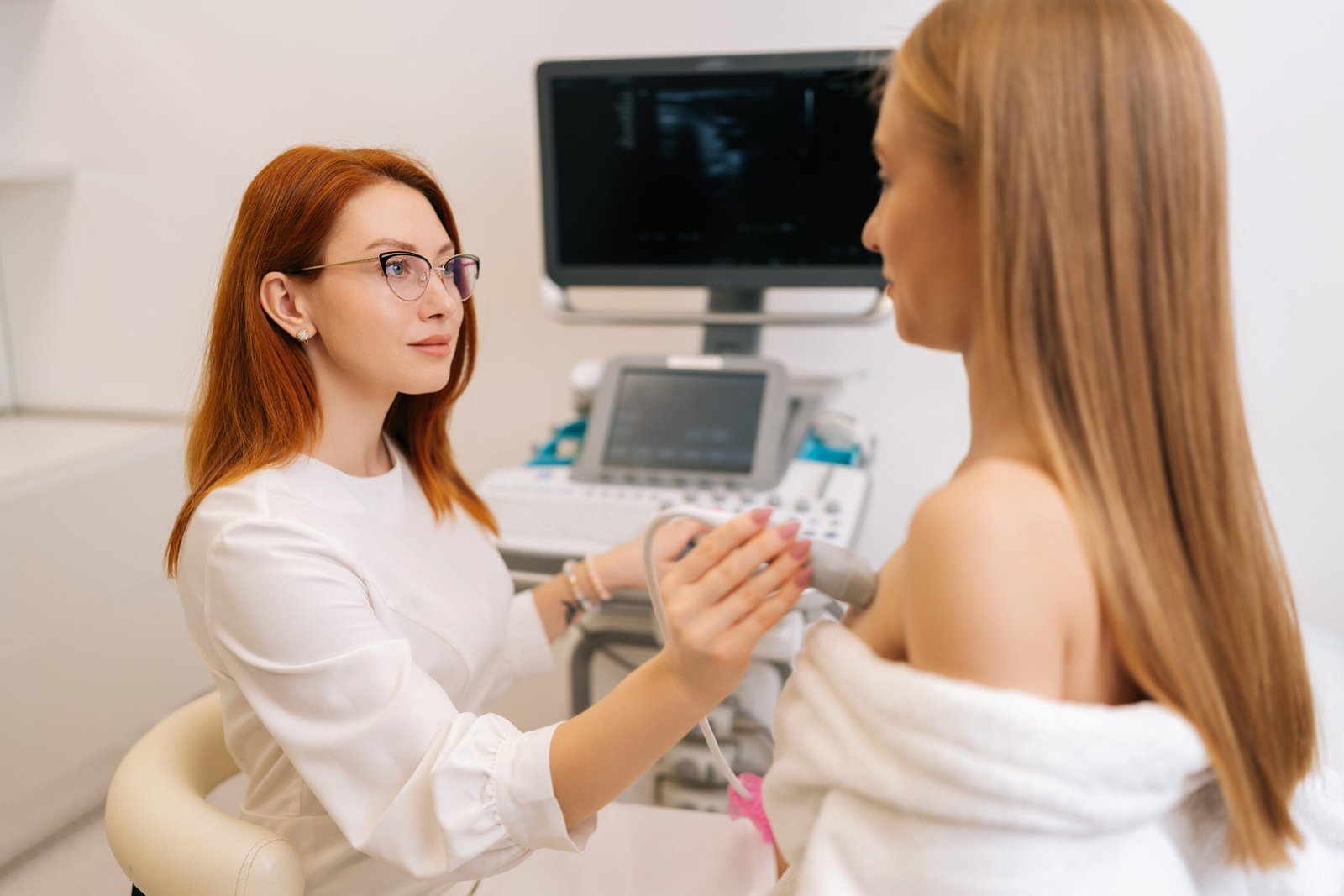
When should you start getting mammograms, and how often should you have one?
The answer depends on your age, personal breast cancer risk, family history and previous breast findings. Different medical organizations also have somewhat different recommendations about when routine mammography should begin and how frequently screening should be performed.
A mammogram is a low-dose X-ray examination of the breasts that can identify changes in breast tissue before they can be detected by touch.
At Exact Check Diagnostic Center, mammography is available for patients undergoing breast cancer screening or diagnostic evaluation.
Why Are Screening Mammograms Important?
A screening mammogram is performed in people who do not have breast symptoms to look for signs of breast cancer at an earlier stage.
Mammograms can identify findings such as:
- Masses
- Microcalcifications
- Changes in breast tissue
- Architectural distortion
- Other abnormalities that may require further evaluation
Not every abnormal mammogram means breast cancer. If an area requires closer examination, your physician or radiologist may recommend additional mammogram views, breast ultrasound or other tests.
At What Age Should You Start Getting Mammograms?
There isn't one screening schedule that applies to every woman.
For women at average risk for breast cancer, major medical organizations generally recommend beginning routine mammography during the 40s, although recommendations vary regarding the exact starting age and whether screening should occur every year or every two years.
The appropriate screening plan depends on your individual circumstances.
Discuss with your physician:
- When you should begin mammography
- How often you should be screened
- How long you should continue screening
- Whether you have risk factors that require a different approach
Do I Need a Mammogram Every Year?
Not necessarily.
Some breast cancer screening guidelines recommend annual mammography during certain ages, while others recommend screening every two years for women at average risk.
Your physician can help determine an appropriate interval based on your:
- Age
- Overall health
- Personal breast history
- Family history
- Breast density
- Previous mammogram findings
- Individual breast cancer risk
Women at higher risk may require a different screening schedule or additional imaging.
Who May Need Earlier Breast Cancer Screening?
Some women have a higher-than-average risk of developing breast cancer and may need to begin screening earlier or undergo additional examinations.
Risk factors can include:
- A strong family history of breast cancer
- Certain inherited genetic mutations associated with breast cancer risk
- A personal history of breast cancer
- Certain previous high-risk breast findings
- Previous radiation therapy to the chest at a young age
- Other factors associated with substantially increased breast cancer risk
If you have a strong family history of breast or ovarian cancer, discuss it with your physician rather than waiting until the usual screening age.
Your healthcare provider can determine whether you need earlier mammography, genetic counseling, breast MRI or another screening approach.
What If My Mother or Sister Had Breast Cancer?
Having a first-degree relative, such as your mother, sister or daughter, with breast cancer can affect your individual risk.
However, family history is more complex than simply whether one relative had breast cancer.
Your physician may consider:
- Which relative was affected
- Their age at diagnosis
- Whether multiple relatives have had breast or ovarian cancer
- Whether cancers occurred on your mother's or father's side of the family
- Whether a known hereditary cancer-related genetic variant is present in your family
This information can help determine whether you need a different screening strategy or further risk assessment.
Should I Wait for Symptoms Before Getting a Mammogram?
Screening mammography is specifically intended for people without breast symptoms.
You should not wait for your next routine screening appointment if you notice a new breast change.
Contact your physician if you notice symptoms such as:
- A new breast or underarm lump
- Nipple discharge, particularly if unexpected or bloody
- Changes in breast size or shape
- Skin dimpling or other new skin changes
- New nipple changes
- Persistent, localized breast symptoms
Your physician may recommend diagnostic breast imaging rather than a routine screening mammogram.
Screening Mammogram vs. Diagnostic Mammogram
Although both use mammography, screening and diagnostic examinations have different purposes.
| Screening Mammogram | Diagnostic Mammogram |
| Performed when there are no breast symptoms | Used to investigate a symptom or previous abnormal finding |
| Intended for routine breast cancer screening | Focuses on a particular clinical concern |
| Standard screening images are obtained | Additional or specialized views may be required |
| May identify an abnormality requiring further assessment | Often forms part of a more targeted breast evaluation |
If you have a breast symptom, tell your physician and the imaging facility when scheduling rather than simply booking a routine screening examination.
Mammogram vs. Breast Ultrasound: Do I Need Both?
Mammography and breast ultrasound provide different information.
Mammography uses low-dose X-rays and is an established breast cancer screening examination.
Breast ultrasound uses sound waves and is commonly used to evaluate particular breast findings. For example, ultrasound can help characterize certain lumps or abnormalities identified during examination or mammography.
Ultrasound is not simply a replacement for mammography in routine screening.
Depending on your age, symptoms, breast density, risk factors and mammogram findings, your physician may recommend one or both examinations.
What Does Breast Density Mean?
Breasts contain varying proportions of fatty tissue and fibroglandular tissue.
A woman is described as having dense breasts when there is a higher proportion of fibroglandular tissue on mammography.
Dense breast tissue can:
- Make some abnormalities more difficult to see on a mammogram
- Be associated with increased breast cancer risk
If your mammogram report indicates that you have dense breasts, discuss with your physician what that means for your individual screening plan and whether additional assessment is appropriate.
Why Are Previous Mammograms Important?
If you've had previous mammograms, comparison with earlier images can be useful.
Radiologists can look for:
- New findings
- Changes in existing findings
- Areas that have remained stable over time
This is one reason to bring or make available your previous mammogram images and reports when changing imaging facilities.
Comparison does not eliminate the possibility of additional evaluation, but previous examinations can provide valuable context when interpreting a current mammogram.
Does an Abnormal Mammogram Mean I Have Breast Cancer?
No.
An abnormal mammogram means that an area requires further evaluation. Many findings that require additional imaging are ultimately found to be benign.
Depending on the finding, further evaluation may include:
- Additional mammogram views
- Breast ultrasound
- Comparison with previous imaging
- Follow-up imaging
- Breast MRI in selected circumstances
- Biopsy when clinically indicated
Your physician and radiologist will determine the appropriate next step.
How Do I Prepare for a Mammogram?
Mammography requires minimal preparation.
On the day of your examination, you should generally:
- Avoid deodorant and antiperspirant on your underarms
- Avoid powder, lotion or cream on your breasts and underarms
- Wear a two-piece outfit for easier changing
- Bring previous mammogram images and reports when available
- Tell the imaging team if you have breast implants
- Tell the imaging team if you are pregnant or think you may be pregnant
- Tell the technologist about any new breast symptoms
[Read our complete guide to preparing for your mammogram.]
Mammography at Exact Check Diagnostic Center
Exact Check Diagnostic Center provides mammography and breast imaging services for patients undergoing screening or diagnostic evaluation.
Before your visit, contact Exact Check to:
- Confirm mammography availability at your preferred branch
- Ask about the current mammogram price
- Confirm whether a doctor's request is required
- Check appointment availability
- Ask what previous imaging you should bring
- Inform the team if you have breast implants
- Confirm when and how your results will be released
Schedule Your Mammogram
If your physician has recommended a mammogram, contact Exact Check Diagnostic Center to confirm the appropriate examination, preparation requirements, pricing and available schedules.
If you're unsure whether it's time to begin routine mammography, discuss your age, family history, previous breast findings and individual risk factors with your physician.
This article is intended for general educational information and does not replace medical advice, diagnosis or treatment from a qualified healthcare professional.