
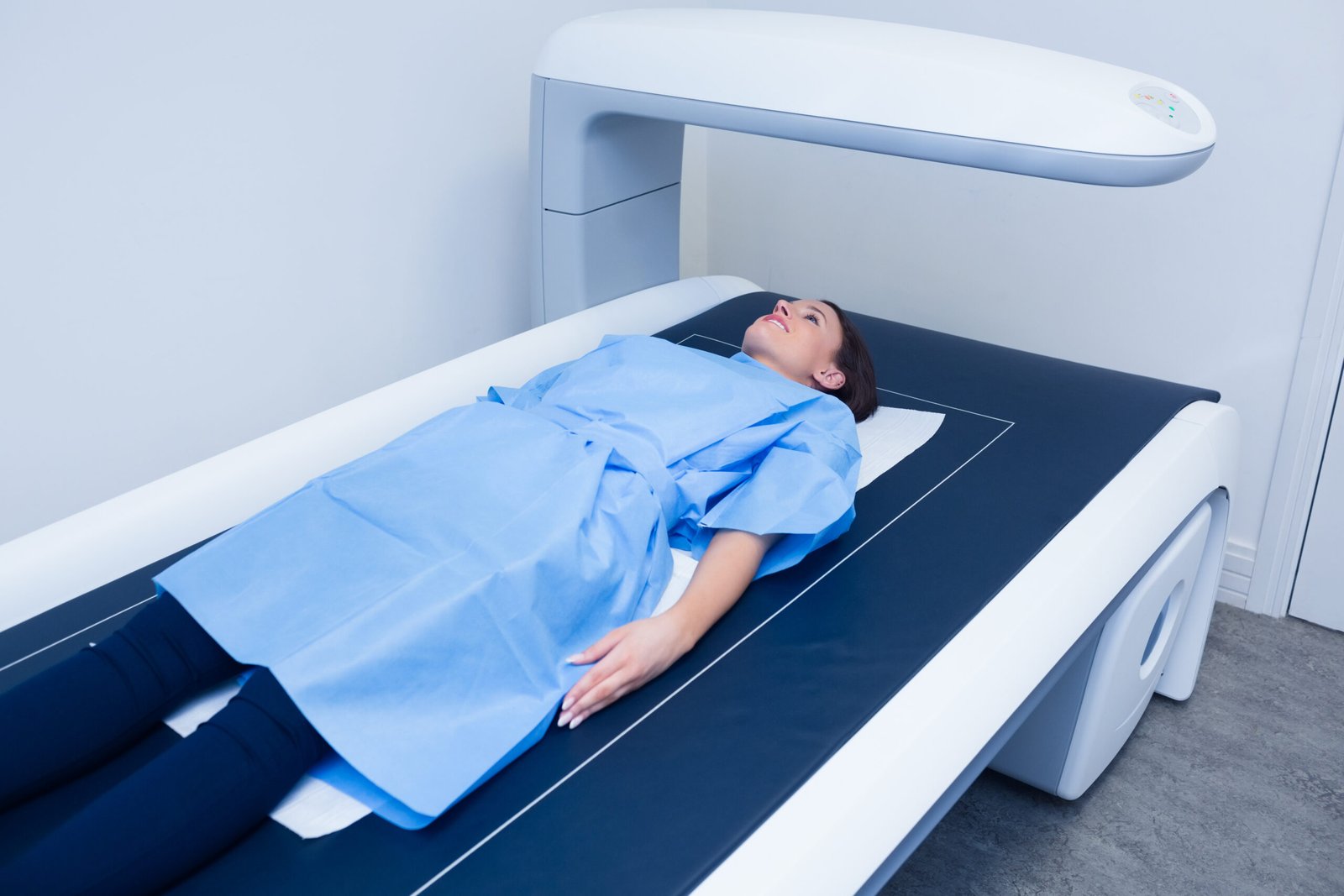
A bone density test, also called bone densitometry, BMD testing, or a DEXA/DXA scan, measures bone mineral density and helps doctors assess your risk for osteoporosis and fractures.
Osteoporosis can develop without obvious symptoms. For many people, the first sign is a fracture. A DEXA scan can identify low bone mineral density before that happens and can also be used to monitor changes in bone density over time.
At Exact Check Diagnostic Center, bone densitometry is available for patients who have been advised to assess or monitor their bone health.
What Is a Bone Density or DEXA Scan?
DEXA, also written as DXA, stands for dual-energy X-ray absorptiometry.
The test uses low-dose X-rays at two different energy levels to measure bone mineral density. The hip and lumbar spineare commonly examined because fractures in these areas can have significant health consequences.
In some circumstances, the forearm may also be measured.
DEXA is commonly used to:
- Diagnose osteoporosis
- Identify low bone mineral density
- Help assess fracture risk
- Monitor bone density over time
- Evaluate response to osteoporosis treatment
Who Should Get a Bone Density Test?
Not everyone needs routine bone density testing at the same age.
Your physician may recommend a DEXA scan based on your age, sex, medical history, medications and other osteoporosis risk factors.
Bone density testing is commonly considered for:
- Women aged 65 and older
- Postmenopausal women younger than 65 who have increased fracture risk
- Men aged 70 and older
- Younger men with significant osteoporosis risk factors
- Adults who have experienced certain fractures after relatively minor trauma
- People taking medications that can contribute to bone loss, such as long-term corticosteroid therapy
- People with medical conditions associated with bone loss
- Patients already undergoing treatment for osteoporosis when monitoring is appropriate
Screening recommendations can vary between medical organizations and individual patients. Your physician can determine whether a bone density test is appropriate for you.
What Is Osteoporosis?
Osteoporosis is a condition in which bones become less dense and more fragile, increasing the likelihood of fractures.
It is sometimes called a “silent disease” because bone loss itself generally does not cause symptoms.
Osteoporosis-related fractures commonly involve the:
- Hip
- Spine
- Wrist
A fracture, loss of height or changes in posture may sometimes be the first indication that significant bone loss has occurred.
What Is Osteopenia?
Osteopenia means bone mineral density is lower than expected but does not meet the diagnostic threshold for osteoporosis.
Having osteopenia does not necessarily mean you will develop osteoporosis or experience a fracture.
Your physician will consider your bone density together with other factors, such as age, previous fractures, family history, medications and other medical conditions, when assessing your overall fracture risk.
What Do DEXA Scan Results Mean?
One of the most important parts of your DEXA report is the bone mineral density measurement.
Your report may also include a T-score and/or Z-score.
What Is a T-Score?
A T-score compares your bone mineral density with that of a healthy young adult reference population.
For postmenopausal women and men aged 50 and older, T-scores are commonly interpreted using these categories:
| T-Score | General Classification |
| -1.0 or above | Normal bone density |
| Between -1.0 and -2.5 | Low bone mass (osteopenia) |
| -2.5 or below | Osteoporosis |
These classifications should be interpreted by your physician together with your medical history and other fracture risk factors.
What Is a Z-Score?
A Z-score compares your bone mineral density with what's expected for people of a similar age and sex.
Z-scores are particularly relevant when evaluating bone density in certain younger patients.
A low Z-score may prompt your physician to investigate whether an underlying medical condition, medication or other factor could be contributing to reduced bone density.
Does a Low T-Score Mean I Will Have a Fracture?
No.
Bone mineral density is an important factor in fracture risk, but it is not the only factor.
Doctors may also consider:
- Your age
- Previous fractures
- Family history of hip fracture or osteoporosis
- Smoking
- Alcohol consumption
- Certain medications
- Medical conditions associated with bone loss
- History of falls
- Other clinical risk factors
In some patients, physicians may use a fracture-risk assessment tool together with bone density results to estimate the likelihood of a future fracture.
DEXA vs. X-Ray: What's the Difference?
A standard X-ray and a DEXA scan serve different purposes.
| DEXA / Bone Density Scan | Standard X-Ray |
| Measures bone mineral density | Creates images of bones and other structures |
| Used to assess osteoporosis | Commonly used to identify fractures and structural abnormalities |
| Produces measurements such as T-scores | Does not routinely provide bone density scores |
| Uses a low dose of radiation | Radiation exposure varies by examination |
A regular X-ray can identify fractures but is not a substitute for a DEXA scan when bone mineral density needs to be measured.
What Happens During a DEXA Scan?
A DEXA scan is non-invasive and generally painless.
During the examination:
- You will lie on a padded examination table.
- You will be positioned according to the area being measured.
- A scanning arm will pass over the area being examined.
- You will need to remain still while measurements are taken.
There are no injections or needles required for a standard bone density examination.
The examination itself is generally brief, although total appointment time may include registration and preparation.
How Do I Prepare for a Bone Density Test?
Bone density testing usually requires minimal preparation.
Before your examination:
- Wear comfortable clothing without metal around the area being scanned.
- Tell the imaging facility if you are pregnant or think you may be pregnant.
- Inform the staff about any recent imaging examinations involving contrast material, as this may affect scheduling.
- Follow Exact Check's specific instructions regarding calcium supplements before your examination.
If you take prescription medication, do not stop taking it unless your physician has instructed you to do so.
Is a DEXA Scan Safe?
DEXA uses a low amount of ionizing radiation.
As with other X-ray examinations, tell your physician and the imaging facility if you are pregnant or think you may be pregnant before undergoing the test.
Your healthcare provider can determine whether the examination is appropriate for your circumstances.
How Often Should You Have a Bone Density Test?
There is no single testing interval appropriate for everyone.
How often a DEXA scan should be repeated depends on factors including:
- Your initial bone density results
- Age
- Osteoporosis risk factors
- Whether you are receiving treatment
- Changes in your medical condition or medications
Your physician will determine whether and when repeat testing is appropriate.
Can Osteoporosis Be Prevented?
Bone health is influenced by many factors, including genetics, age, hormones, nutrition, physical activity, medications and certain medical conditions.
Depending on your individual circumstances, your physician may recommend measures such as:
- Adequate calcium and vitamin D intake
- Regular weight-bearing and resistance exercise
- Avoiding smoking
- Limiting excessive alcohol consumption
- Fall-prevention measures
- Treatment of underlying medical conditions
- Medication when clinically appropriate
A DEXA scan does not prevent osteoporosis. It provides information that can help your healthcare team assess your bone health and determine whether further evaluation or treatment is needed.
Bone Densitometry at Exact Check Diagnostic Center
Exact Check Diagnostic Center provides DEXA bone densitometry testing for patients who need osteoporosis screening, fracture-risk assessment or bone-density monitoring.
Before your visit, contact Exact Check to:
- Confirm bone densitometry availability at your preferred branch
- Ask about the current DEXA scan price
- Confirm whether you need a doctor's request
- Check preparation requirements
- Ask what documents or previous results to bring
- Check appointment availability
- Confirm when and how your results will be released
Schedule Your Bone Density Test
If your physician has recommended a bone density test, contact Exact Check Diagnostic Center to confirm availability, preparation requirements, pricing and appointment schedules.
If you're concerned about osteoporosis but have not been advised to undergo DEXA testing, speak with your physician about your individual risk factors and whether bone density testing is appropriate for you.
This article is intended for general educational information and does not replace medical advice, diagnosis or treatment from a qualified healthcare professional.